

Gmina Miejska Bartoszyce
Bartoszyce Urban Municipality
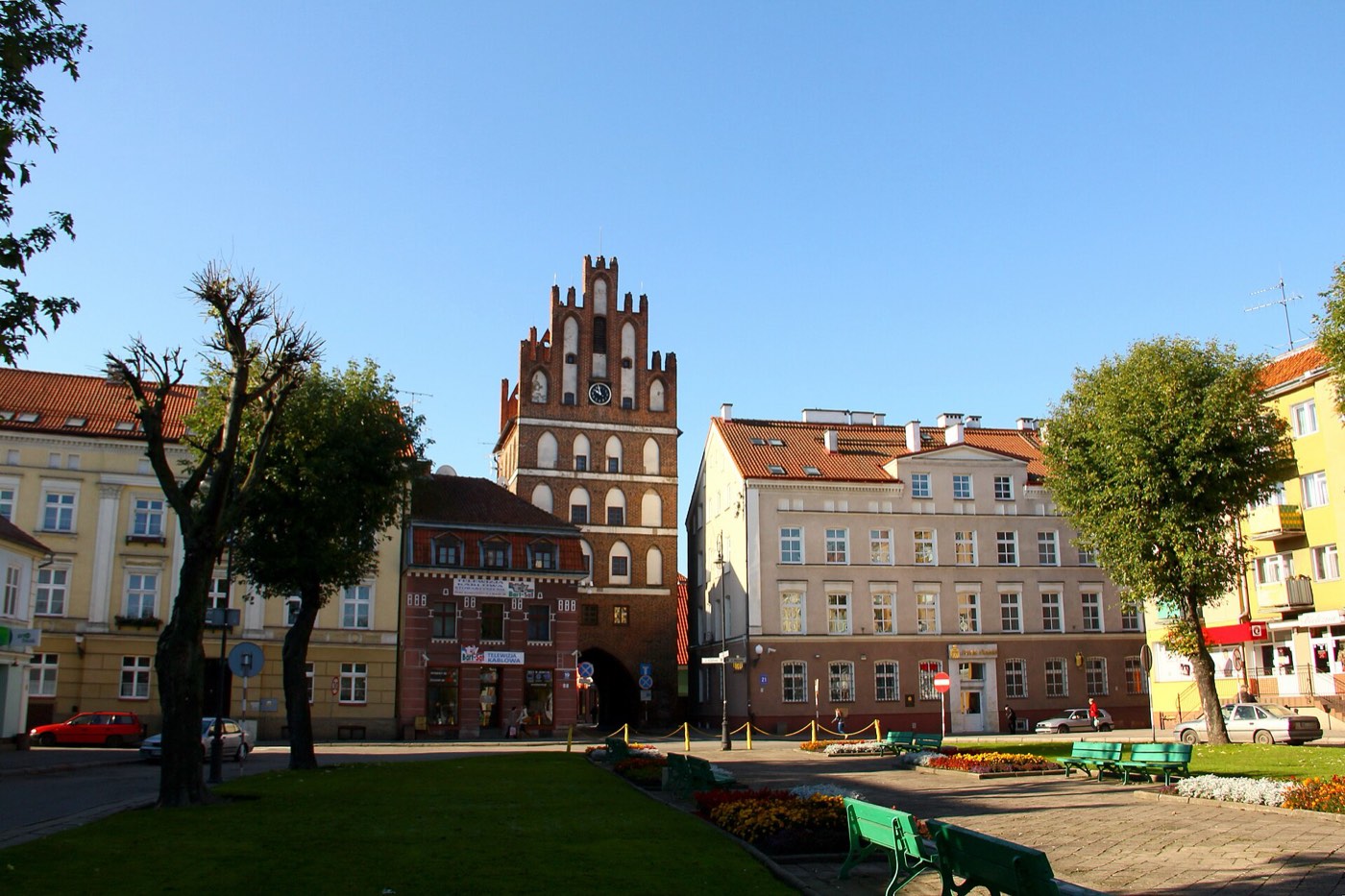
An urban municipality and the seat of Bartoszyce County. The town lies on the Sępopol Plain, on the lower course of the River Łyna. It covers 11.79 km² and has about 20,800 residents. Its landmark is the Lidzbark Gate of 1468.
Overview
- Area: 11.79 km²
- Population: 20,767 (Statistics Poland, 31 December 2025)
- The town lies 17 km from the border with Russia, 58 km from Kaliningrad (Królewiec) and 71 km from Olsztyn
- National road 51 runs through Bartoszyce to the Bezledy border crossing
- Voivodeship roads 512 and 592 also pass through the town
- The first train arrived at Bartoszyce station in 1866. Since 1 July 2002 the town has had no passenger rail services
- The 20th Bartoszyce Mechanised Brigade is stationed in Bartoszyce
From stronghold to county town
In 1240 the Teutonic Knights built a wooden stronghold here on the site of an Old Prussian hillfort. The town was founded in 1326. On 17 February 1332 Grand Master Luther of Brunswick gave the settlement on the right bank of the Łyna the name Bartenstein.
On 26 April 1807 the Treaty of Bartenstein, an alliance between Prussia and Russia against Napoleon, was signed in the town. In 1902 the county seat was moved here from Friedland (Frydland). The new building was raised on the ruins of the Teutonic Order castle.
The Lidzbark Gate
Medieval Bartoszyce had three town gates. The Lidzbark Gate of 1468 has survived. The Königsberg Gate and the Mill Gate were destroyed after the Napoleonic Wars.
Authorities
Mayor (Burmistrz): Wiesław Kurach (term 2024–2029)
Cooperation within the WMSP
The General Assembly admitted Bartoszyce Urban Municipality to the Association on 25 May 2026. This local government takes part in the shared territorial strategy of the borderland through 2030 and in the CuRI 2026–2027 programme (Eastern Border Regions Catching-up Regions Initiative, European Commission + World Bank).